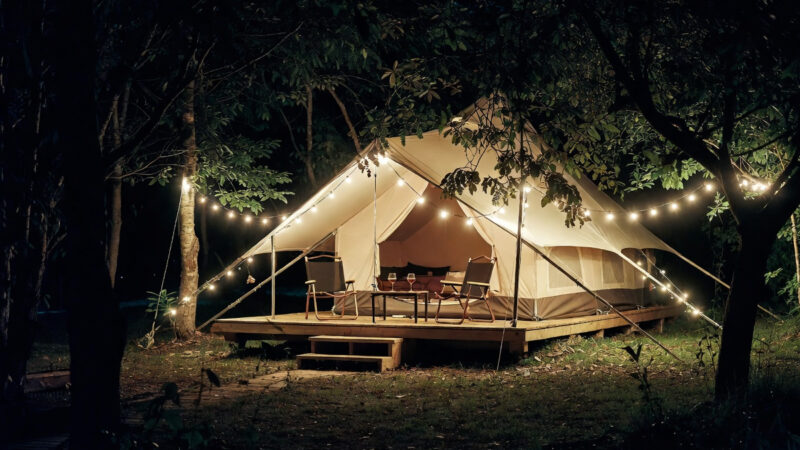
Best Camping String Lights for 2026: Ambiance, Area Light, and a Few That Are Just Pretty

I’ll be honest — the first time someone suggested camping string lights, I thought it sounded like something for a Pinterest board, not a campsite. Like I’m going to drag a string of twinkle lights into the woods to sit next to my campfire?

Yeah, that was dumb of me.

I’ve been running a string light in camp for years now, and I have straight-up left a lantern at home because of it. Once you use one to light up a picnic table, a canopy, or the inside of your rig, you start to understand what the big deal is.

That said — not all string lights are worth hauling out there. Some are genuinely bright enough to replace a lantern. Others are mood lighting at best. And a few are so fragile they’ll snap by day three. So let’s break it down.

Why String Lights Work Better Than You’d Expect

Here’s the thing about a lantern: it makes one bright spot. Everything outside that puddle of light drops off fast, and you’re constantly rotating to face the thing.

String lights work differently. Drape 20 or 30 feet of LEDs across a canopy, around your awning, or strung between two trees, and you get a diffuse zone of light that covers a much bigger area. You can see the ground. You can see across the table. Nobody’s getting a fork in the hand reaching for the chips.

They’re also shockingly compact. My 30-footer rolls into a coil the size of a thick paperback. And most of them run off USB-A or USB-C power, which means the battery pack you’re already bringing for your phone pulls double duty.

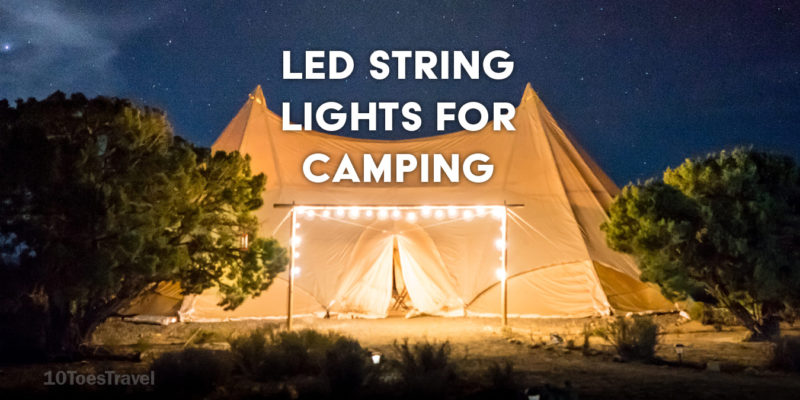
LED camping lights elevate any camping experience

Types of Camping String Lights

Before you buy, know what you’re actually looking at. There are a few different categories, and they’re not interchangeable.

Standard LED string lights (the go-to)

This is your primary option — a wire with LED bulbs spaced along the length, usually USB powered, typically 10 to 30 feet. These are weather-resistant, compact, and bright enough for real campsite use. Some are flexible enough to wrap around tent poles or canopy frames. This is what most people mean when they say “camping string lights.”

LED rope lights

These encase the LEDs in a clear PVC tube. Durable, water-resistant, and usually brighter than standard string lights. The trade-off is bulk — the thicker ones are a poor choice for backpacking but work well for car camping or van setups where you want serious output. Some rope lights now hit 1,600 lumens or more, which is genuinely useful light, not just vibe.

Solar-powered string lights

Getting better every year. Options like the MPOWERD Luci Solar String Lights charge via solar panel and USB, so a cloudy PNW day doesn’t leave you in the dark. The Brightech Ambiance Pro has been a popular pick for glampers and car campers for years — Edison-bulb style, weatherproof, solar powered, and available in 27 or 48-foot lengths. They’re not the most packable, but they look great around a camp kitchen or RV awning.

Fairy lights

Tiny bulbs, not very bright, more about effect than function. They can look nice inside a tent for mood, but don’t expect them to light up a campsite. They’re also usually the least robust of the bunch. Fine if you know what you’re getting.

Bulb-style string lights

Think backyard bistro lights with larger globe or Edison-style bulbs. These are heavy and bulky but put out a warm, attractive light. Best suited for a semi-permanent setup — a group camping spot, a base camp you’re staying at for a week, or permanently mounted in a van or camper. Not a trail-bag item.

How Long Will They Run?

Most camping string lights pull somewhere between 2 and 5 watts. That’s genuinely tiny — one of the lowest-draw devices you’ll ever plug into a battery.

Do some quick math: a 5-watt string light running for 4 hours uses 20 watt-hours. A cheap 10,000mAh USB power bank holds roughly 37 usable watt-hours. So even a budget battery bank runs your lights all evening with juice left over for a phone charge.

Step up to a real portable power station and string lights become practically free in terms of capacity. A 300Wh unit — like the Jackery Explorer 300 Plus or the Bluetti AC2A — can run a 5-watt string light for 50+ hours before it’s even close to empty. You’d never think about lights again for the whole trip.

If you want a full breakdown of how to size a power station for everything you’re running at camp — fridge, fan, CPAP, devices, and lights — I put together a complete guide here: Best Portable Power Stations for Camping (2026). The watt-hour math section will save you from buying something too small.

For a van or truck setup like mine, Leif’s 100Ah lithium handles string lights all weekend without registering a blip. For backpacking: one compact bank, one short string, budget for a few hours a night. That’s really all you need.

What to Look For When Buying

Length: 10 feet will cover a small tent or table. 20–30 feet is where you start to light up a real campsite or the underside of a canopy. Longer strings can often be daisy-chained together (BioLite’s SiteLight system does this well).

Power source: USB-A is the most universal. USB-C is where things are headed and more convenient if your power bank uses it. Solar is great for extended trips (if you aren’t in the trees.) Avoid anything that requires disposable batteries unless it also has a rechargeable option — you don’t want to be hunting AA batteries at a camp store.

Weather resistance: Anything you’re using outdoors should be at minimum splash-resistant. Look for an IPX4 rating or equivalent. This matters a lot in the PNW, where “clear skies” can turn into sideways rain by 9 p.m.

Dimmer settings: More useful than you’d think. Bright for cooking and card games, dim for winding down without blinding your tentmates.

Weight and pack size: If it’s going in a backpack, this matters a lot. If it’s going in a Rubbermaid tub in the truck, not so much.

String Lights Worth Considering in 2026

Here are the options worth your time right now.

Revel Gear Trail Hound (30 ft.) One of the most consistently recommended string lights for camping or even backpacking. 100 LEDs across 30 feet of wire, warm light tone, dimmable, USB-A powered, and compact enough to actually take backpacking. They weigh next to nothing! The copper-strand wire wraps around tent poles or canopy frames easily. It’s also cheap enough that you could grab two sets and still come in under some single-light options. Cliff has these in Leif the Adventure Van as secondary lighting and they are great for when you want a more relaxed mood than the main lights provide. 

You can find these at REI pretty reasonably. 

BioLite Luci 44′ Solar String Lights + Detachable Power Hub This is the one that turns a campsite into a place you actually want to sit in after dark. Forty-four feet covers a real space — across an awning, between two trees, around the whole cooking area — and the warm white light has that campfire-adjacent glow that makes everything feel less like a parking lot and more like somewhere you chose to be. 

The genuinely clever part is the detachable power hub. Leave the string up, pop the hub off, set it in the sun to recharge, snap it back in when it’s full. No taking everything down. No fumbling with a separate battery pack. It just stays put and does its thing.

It’s the most expensive pick on this list. It’s also the one you’ll still be using five years from now. You can get this string light at REI or on Amazon, they are the same price at both stores, though I tend to pick REI for the rewards points

Brightech Ambiance Pro (USB or Solar, 24–48 ft.) The glamping choice. Edison-bulb style, weatherproof, shatterproof bulbs, and available in USB or solar versions. These are technically marketed as patio lights, but they’ve been a legitimate camp staple for years. They are definitely too heavy for backpacking, but are perfect for car camping or a base camp. The USB version plugs straight into a power bank or power station. Loads of these on Amazon for you to choose from

LuminAID Solar String Light with Phone Charger (32 ft.) This one pulls triple duty: 32 feet of string lights, a 300-lumen area lantern, and a phone charger — all in one unit that recharges via solar or USB. The candle flicker mode is legitimately good for winding down around camp, and the area light is bright enough to actually cook by when you need it. It also charges your phone, which makes it a serious value proposition if you’re trying to keep your kit lean.
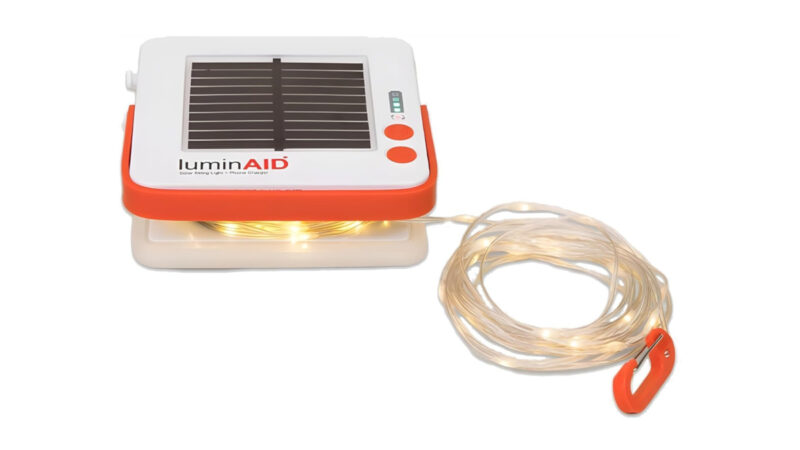
LuminAID string light.

LuminAID started out designing lights for disaster relief — it’s a women-owned company that’s put over 200,000 solar lights into the hands of people who had none. You’re buying a solid piece of gear and supporting something worthwhile at the same time. 

The best price on these is on Amazon

Note From Cliff:  I really like the LuminAID products. I’ve had one of their inflatable lanterns for years in Leif and it has come in handy on multiple occasions and stores away nicely!

Where to Hang Them (And Why This Is Actually the Hard Part)

The most common complaint about camping string lights — and it’s legit — is finding a good spot to run them without tripping over the cord or pulling them down at midnight.

A few solutions that actually work:

Under a canopy: Best option for car camping. Hook the string along the underside frame of a pop-up canopy and you’ve got even, diffuse light over the whole cooking and eating area. This is where string lights earn their keep.

Between two trees: Works great when the trees cooperate. Use small S-hooks or zip ties to secure the ends so the cord doesn’t creep down.

Inside your tent or shelter: A short string (10 ft.) along the peak of a tent or tarp creates surprisingly useful ambient light. Dim it down when you’re trying to sleep. Beats fumbling for a headlamp every time you need to find something.

Around an awning or van/camper side: This is where the bulkier rope lights and Brightech-style bistro lights shine. They can take a breeze, and they look legitimately good when you’re set up for a few days.

The thing to avoid: running them across open ground where they’ll be a trip hazard or a cord that someone can kick the power bank loose from. Speaking from experience here.

Quick Verdict

Camping string lights went from “camping gimmick” to “I’m leaving the lantern home” faster than I expected. If you’re car camping, van camping, or setting up under any kind of shelter, get a 20–30 foot string light and try it for one trip. You’ll get it.

Match what you buy to what you’re actually doing:

  • Backpacking or ultralight: The Revel Gear Trail Hound. Lightweight, simple, no bulk. Grab one and forget about it.
  • Car camping with a canopy: The LuminAID Solar String Light. String lights, lantern, and phone charger in one unit — worth the extra weight when you’re not carrying it on your back.
  • Van, RV, or base camp: BioLite Luci 44′ is the move. Set it up once, leave it up, and just pop the hub off to recharge.
  • Glamping or longer stays: Brightech Ambiance Pro. It looks good, it holds up, and nobody’s going to complain about the vibe.

Got a setup that works for solo trips or smaller camps? Drop it in the comments — I’m always looking for what fellow hiketroverts are actually running out there. See you on the trail.

Picture of MadMadViking

MadMadViking

Tall, crazy-ass viking bred dude that has escaped the wilds of North Idaho to roam the world in search of fame, fortune and adventure. Come tag along!

In This Post

What We're Packing

Wondering what I’m rocking when I head down trails? Here is my basic kit when I head out on day hikes right now.