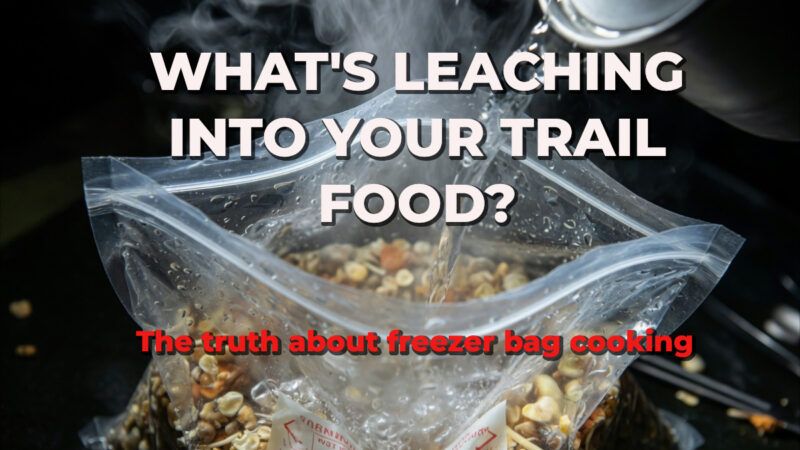
Freezer bag cooking sounds like the perfect trail meal solution — until you start thinking about what happens when you pour boiling water into a Ziploc.
The concept is elegant. Dehydrate your meals at home, pack them in bags, add boiling water in camp, eat out of the bag, toss it. No pots to scrub. No extra weight. Just a hot meal and a clean conscience. I get the appeal. I used to do it myself.
Then I started paying attention to what the research actually says about heat and plastic — the kind of reading I do regularly over at MadMadViking, where I cover men’s health topics with a Human Biology degree in my back pocket — and I couldn’t unknow it.
Let’s not forget the waste factor – The other problem with freezer bag cooking goes beyond what ends up in your body. Roughly 500 billion plastic bags are used worldwide every year, and more than one million end up in the trash every single minute. It takes 1,000 years for a plastic bag to degrade in a landfill — and even then it doesn’t fully disappear, breaking down instead into microplastics that keep polluting the environment indefinitely. Only 9% of plastic waste is recycled globally. For those of us who spend our lives in wild places because we want to protect them, casually tossing a wad of used Ziploc bag in the trash at the end of every trail meal is hard to square with Leave No Trace values.
What Happens When You Add Boiling Water to Plastic
The core problem is chemistry. Plastics aren’t inert containers. They’re complex materials held together by chemical bonds, and heat weakens those bonds. When you pour 212°F water into a plastic bag, you’re creating exactly the conditions researchers flag as highest risk for chemical migration into food.
I’ve written about reducing microplastic exposure in the kitchen over at MadMadViking — swapping cutting boards, utensils, and storage containers for non-plastic alternatives. That post covers the everyday exposure most people never think about. Freezer bag cooking is that same problem compressed into its worst-case form: maximum heat, direct food contact, and an extended soak time. It’s the scenario you’d design if you were trying to maximize how much plastic ends up in your meal.
Recent studies confirm that leaching begins at temperatures as low as 100°F and increases sharply from there. Boiling water contact represents the worst-case scenario on that scale. It’s not just the old BPA concern anymore either. A 2024 investigation found more than 3,600 chemicals that can migrate from food packaging into the body, 79 of which are linked to cancer, genetic mutation, and endocrine disruption. Ziploc is currently facing lawsuits specifically over microplastic exposure from their bags — the science has moved far enough that litigation is now following it.
The “food-safe” label doesn’t change any of this. That designation means the bag won’t melt or release fumes. It says nothing about chemical migration into your food under heat stress.
What About Mylar Bags?
Some backpackers have moved to Mylar bags as a perceived upgrade, and it’s a reasonable instinct. The aluminum layer is inert and gives you an excellent moisture and oxygen barrier for long-term storage. That’s exactly what Mylar was designed for: cold, dry storage, not boiling water contact.
The plastic laminate layers bonded to that aluminum foil are still there. Those layers, typically polyethylene or polyester, are what actually contact your food. PET in particular can leach antimony, a metalloid used in its manufacturing process, when exposed to heat. The commercial hiking meal pouches from brands like Mountain House use a food-grade laminate specifically rated for hot water use. A standard Mylar bag from a food storage supplier is not the same product.
Reusing a Mountain House pouch is arguably better than a generic Mylar bag, but you’re still eating out of heated plastic.
The “But Stasher Bags” Argument
Platinum silicone is genuinely safer than polyethylene under heat. Stasher bags are a real improvement and a good option for base camp and car camping situations. But for multi-day backpacking, the weight and bulk add up fast. A full week of dehydrated meals in Stasher bags is a meaningful addition to your pack. The no-cleanup convenience of bag cooking is also partly lost, since silicone needs a more thorough rinse than a tossed Ziploc.
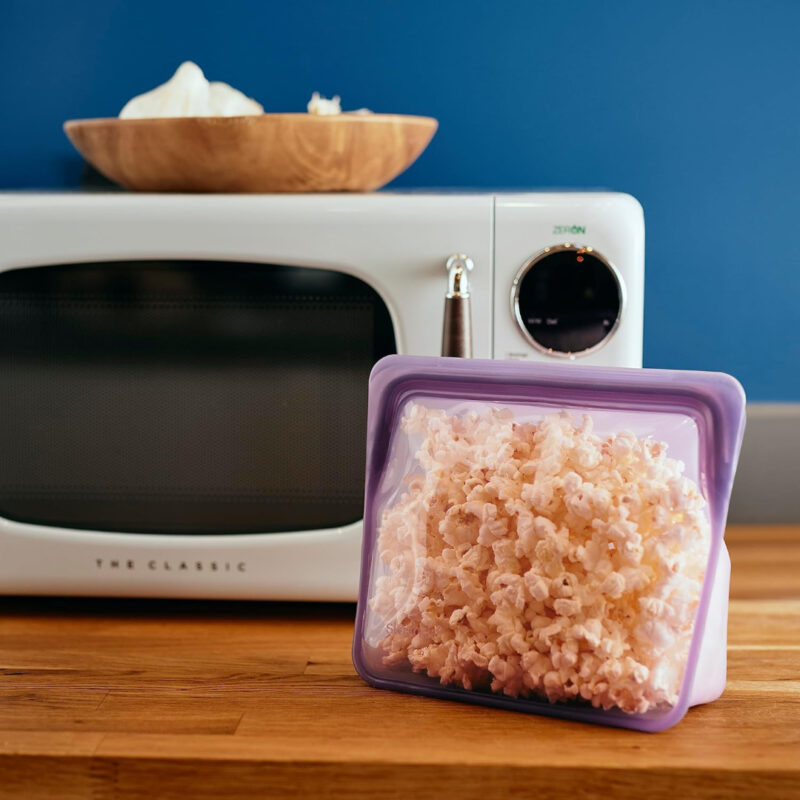
I’m not saying Stashers are bad. For a two-night trip with a small kit they’re worth considering. But they don’t fully solve the problem for serious backcountry use.
The System I Actually Use
The honest answer is that there’s no perfect plastic-free bag cooking solution on trail. After a lot of thought, I landed on unbleached kraft paper bags for dry meal storage — specifically the kind sold for bakery and snack use, like these Paper Sandwich Bags. Measure your dehydrated meal into the bag, fold the top down, tape it shut, and write the meal name and cook instructions directly on the outside. No plastic ever touches your food from home to pot.
From there, all the paper packets go into an odor-proof bag, which then goes into your bear canister. This is actually the key to making the paper bag system work without worry. The bear canister does all the protection work — nothing is getting crushed, torn, or soaked inside a hard shell. The odor-proof bag keeps smells contained and adds one more layer of moisture protection for the paper packets inside.
Paper bags are more delicate than plastic, and that’s worth being honest about. A Ziploc shrugs off getting crushed at the bottom of a pack. A kraft paper bag less so. But with everything living inside the bear can, that fragility is a non-issue in practice. If you’re heading into genuinely wet conditions or just want extra insurance, double bagging the packets inside the odor-proof bag costs almost nothing in weight or money.
The real upside beyond the no-plastic benefit is how the system packs down. An empty kraft paper bag folds flat to essentially nothing. After your last meal on day five you’re packing out a few flat paper scraps instead of a wad of used Ziplocs.
The key to keeping cooking convenient is choosing one-pot meals that only need rehydration, not actual cooking. Couscous, instant mashed potatoes, ramen-style noodle dishes, and rehydrated rice and bean meals leave almost no residue in a clean titanium pot. Dump the bag into the pot, add boiling water, put the lid on, wrap it in your puffy or a pot cozy for ten minutes, eat directly from the pot, and you’re left with a vessel that needs about thirty seconds of cold water and a silicone scraper to clean completely.
A small silicone scraper weighs almost nothing and packs flat. A single folded paper towel as backup adds another few grams. Pack both out. Total cleanup time from done eating to clean pot is under two minutes in most conditions.
The Gear That Makes It Work
A good titanium pot is the foundation. The TOAKS 750ml and the Snow Peak 700ml Titanium are both excellent options that are light enough to justify on any trip. Titanium heats fast, cleans easily, and doesn’t react with food.
Read My Full Breakdown of My Top Brands Of Titanium Cooking Pots
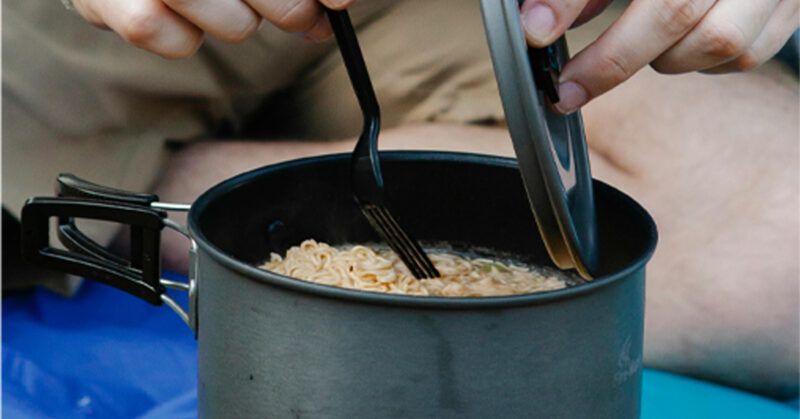
A pot cozy dramatically reduces fuel consumption and is the real functional replacement for bag cooking’s insulation advantage. You bring water to a boil, add your meal, drop the pot in the cozy for ten minutes, and the residual heat does the rest. No simmering, no tending the stove, and your fuel lasts longer.
For meals themselves, the same dehydrating and prep process used for freezer bag cooking applies directly. The only change is what the food rehydrates in.
Why This Matters More Than It Might Seem
I want to be clear that I’m not writing this from a place of panic. I’m writing it from a place of 40-plus years on PNW trails, a Human Biology degree, and a lot of time spent deep in the research on what plastic exposure actually does to the body.
That research has moved significantly in the last two years. A 2025 study found microplastic concentrations in human brain tissue at levels seven to thirty times higher than in other organs like the liver or kidneys. A separate analysis of 155 common hot and cold beverages found microplastics in every single sample tested — with hot drinks showing dramatically higher concentrations than cold. BPA, phthalates, and PFAS chemicals have been linked to oxidative stress, hormonal disruption, reproductive issues, and elevated cancer risk. These aren’t fringe findings anymore. They’re showing up in The Lancet.
Freezer bag cooking asks you to pour boiling water into plastic and eat from it. Given what we now know about how heat drives chemical migration, that’s a tradeoff I’m no longer willing to make on trail. The pot system isn’t meaningfully harder, the cleanup is manageable, and the meals are just as good.
Your food should fuel your miles, not add to your chemical load.
Want more on reducing microplastic and chemical exposure in daily life? I cover it in depth over at MadMadViking.com.
Got a plastic-free trail cooking system of your own? Drop a note to hello@10toestravel.com.
FAQ Section:
Is freezer bag cooking actually dangerous? The research doesn’t use the word dangerous, but it’s consistent: pouring boiling water into plastic significantly increases chemical and microplastic migration into food. Whether any single meal crosses a harmful threshold is hard to quantify precisely, but the direction of the evidence is clear. Lower exposure is better, and avoiding boiling water contact with plastic is one of the more straightforward ways to reduce it.
What’s the best plastic-free backpacking meal system? A titanium pot with a pot cozy paired with low-residue one-pot meals is the most practical replacement. It adds minimal cleanup time and no meaningful weight penalty over a bag cooking setup.
Are Mylar bags safer than Ziploc bags for backpacking meals? Standard Mylar bags are designed for cold storage, not hot water contact. The plastic laminate layers still present leaching concerns under heat. Commercial hiking meal pouches use a different food-grade laminate rated for hot water — that’s not the same product as a generic Mylar food storage bag.
Can I use Stasher bags for backpacking? Stasher bags are made from platinum silicone and handle boiling water without the same leaching concerns as polyethylene. For short trips or base camping they’re a solid option. For multi-day backcountry trips the weight and bulk become a real consideration.